
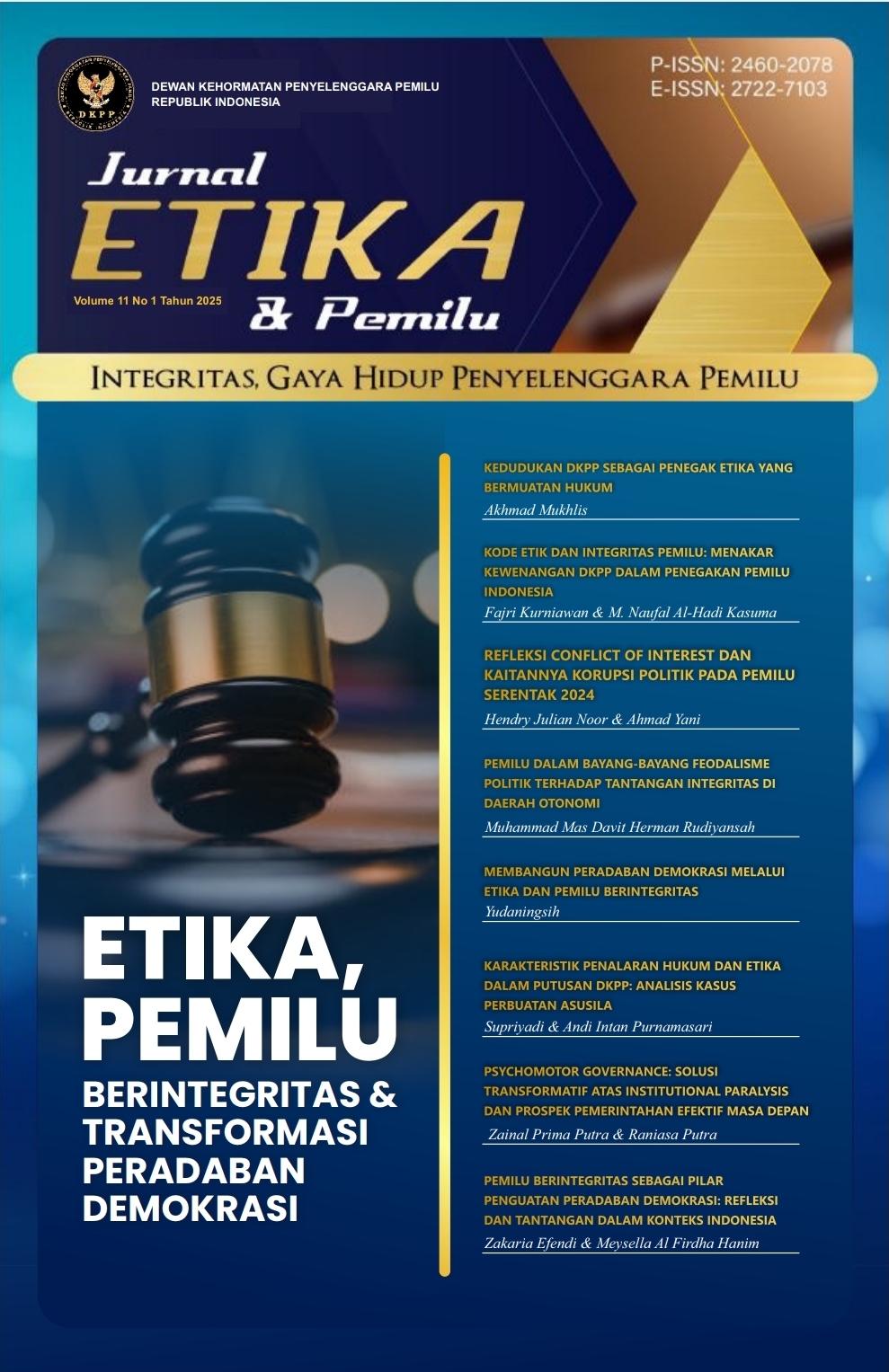
PEMILU DALAM BAYANG-BAYANG FEODALISME POLITIK TERHADAP TANTANGAN INTEGRITAS DI DAERAH OTONOMI
Abstrak
Pemilu di daerah otonomi di Indonesia tidak hanya menjadi arena kompe- tisi politik, tetapi juga ruang yang sarat dengan praktik feodalisme politik, terutama melalui politik dinasti dan loyalitas personal. Studi ini menerapkan metode yuridis normatif dengan pendekatan sosio-legal untuk menelaah bagaimana regulasi pemilu, kultur politik lokal, serta dinamika patronase berpengaruh terhadap integritas demokrasi elektoral. Hasil studi menun- jukkan bahwa politik dinasti berkembang subur karena lemahnya regulasi dan pengawasan, serta diperkuat oleh sikap pragmatis partai politik yang lebih mengutamakan elektabilitas daripada kaderisasi. Sementara itu, loyali- tas personal masyarakat terhadap figur pemimpin, yang berakar pada kultur paternalistik dan jejaring patron-klien, menciptakan distorsi serius terhadap prinsip kebebasan memilih. Kondisi ini mengurangi transparansi, akunt- abilitas, dan keadilan dalam pemilu, sekaligus mempersempit ruang parti- sipasi politik warga negara. Oleh karena itu, pembenahan integritas pemilu melalui reformasi regulasi, penguatan partai politik, dan pendidikan politik masyarakat menjadi agenda mendesak untuk memastikan demokrasi lokal berjalan lebih inklusif, akuntabel, dan berorientasi pada kedaulatan rakyat.
Unduhan
Diterbitkan
Terbitan
Bagian
Lisensi
License Terms
1. Copyright Policy
Authors who publish with Jurnal Etika dan Pemilu retain the copyright to their work. By submitting a manuscript, authors grant the journal the right of first publication, with the work simultaneously licensed under a Creative Commons Attribution-NonCommercial 4.0 International License (CC BY-NC 4.0).
2. Creative Commons Attribution-NonCommercial 4.0 (CC BY-NC 4.0)
This license allows others to:
-
Share: Copy and redistribute the material in any medium or format.
-
Adapt: Remix, transform, and build upon the material.
Under the following terms:
-
Attribution: You must give appropriate credit, provide a link to the license, and indicate if changes were made. You may do so in any reasonable manner, but not in any way that suggests the licensor endorses you or your use.
-
NonCommercial: You may not use the material for commercial purposes.
3. Author Rights
Authors retain the right to:
-
Archive their own articles in institutional or subject-based repositories (such as university websites).
-
Use their articles in their own future work, including lectures, books, or personal compilations.
-
Retain intellectual property rights without restrictions, provided that the original publication in Jurnal Etika dan Pemilu is properly cited.
4. User Responsibilities
Users of the journal website must comply with the following:
-
Any redistribution of published content must include a clear citation of the original article, including the author’s name, the title of the article, the journal name, the volume/issue number, and the DOI link.
-
Commercial reproduction or distribution of any content published in this journal is strictly prohibited without the express written permission of the copyright holder (the author) and the journal publisher (DKPP).
5. Third-Party Content
Some materials (such as images, tables, or data sets) published within an article may be subject to third-party copyright. It is the responsibility of the author to ensure that all necessary permissions have been obtained for the inclusion of such materials prior to submission.