
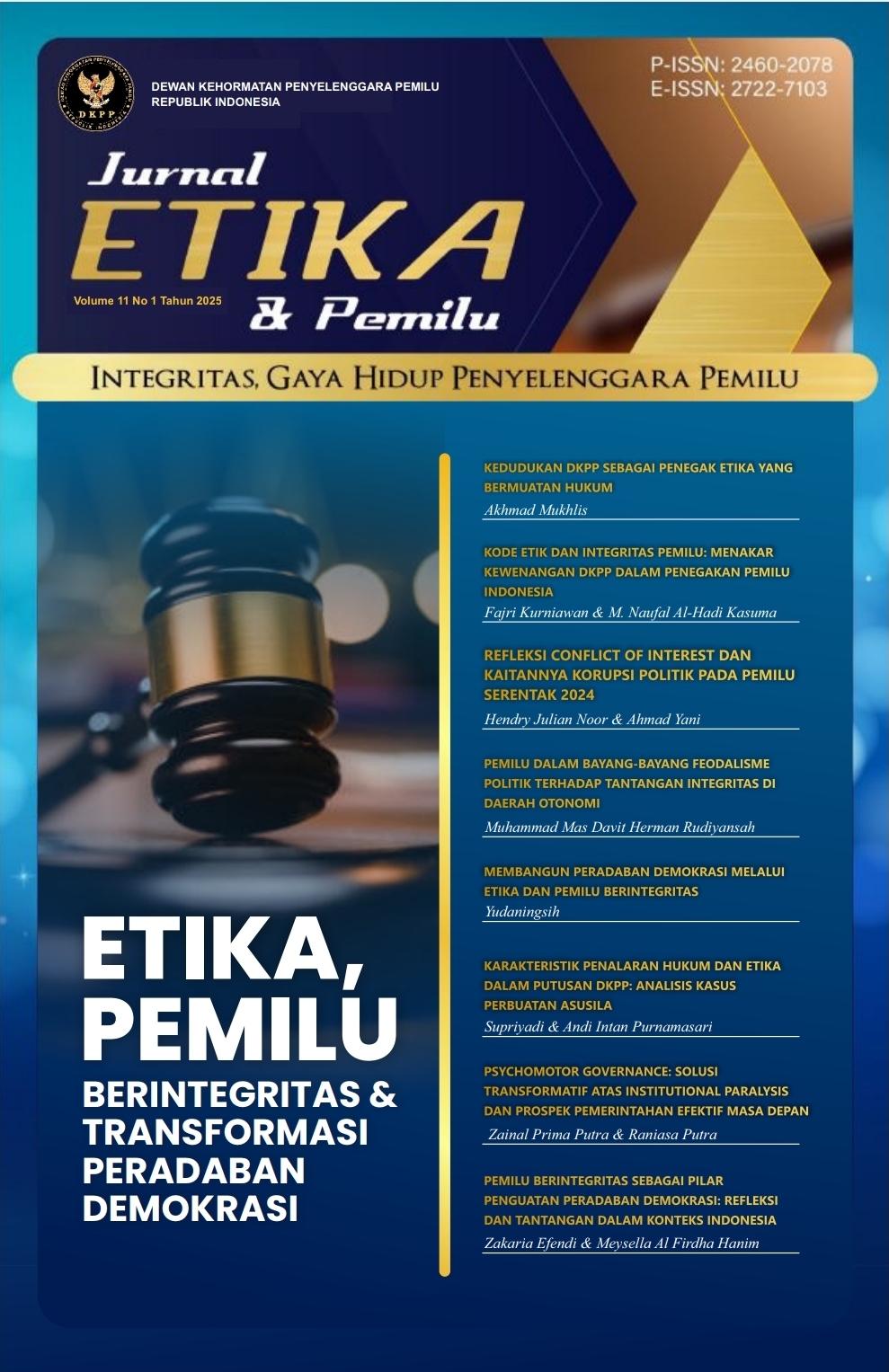
MEMBANGUN PERADABAN DEMOKRASI MELALUI ETIKA DAN PEMILU BERINTEGRITAS
Abstrak
Demokrasi Indonesia merupakan hasil dari perjuangan panjang rakyat da- lam menegakkan hak-hak politik, bukan hadiah yang datang secara tiba-tiba. Pasca reformasi 1998, pemilihan umum (pemilu) langsung menjadi tonggak penting dalam sirkulasi kekuasaan. Namun, demokrasi kerap terjebak pada dimensi prosedural dan melupakan substansi moralnya. Fenomena politik uang, polarisasi identitas, serta arus disinformasi di ruang digital menun- jukkan rapuhnya fondasi demokrasi ketika etika politik diabaikan. Dalam konteks ini, etika politik dan integritas pemilu menjadi prasyarat utama untuk membangun peradaban demokrasi yang bermartabat. Pemilu berin- tegritas tidak hanya menjamin legitimasi pemerintahan melalui kejujuran, transparansi, dan akuntabilitas, tetapi juga memperkuat kepercayaan publik. Sementara itu, etika politik berfungsi sebagai pedoman moral yang mence- gah demokrasi terjebak dalam praktik transaksional dan manipulatif. Sinergi antara etika dan integritas pemilu dapat melahirkan demokrasi substantif yang beradab, adil, dan berkelanjutan. Tulisan ini mengkaji peran etika da- lam memperkuat peradaban demokrasi serta pentingnya pemilu berinteg- ritas melalui pendekatan normatif, studi literatur, dan analisis komparatif, guna memberikan refleksi kritis terhadap arah demokrasi Indonesia di masa depan.
Unduhan
Diterbitkan
Terbitan
Bagian
Lisensi
License Terms
1. Copyright Policy
Authors who publish with Jurnal Etika dan Pemilu retain the copyright to their work. By submitting a manuscript, authors grant the journal the right of first publication, with the work simultaneously licensed under a Creative Commons Attribution-NonCommercial 4.0 International License (CC BY-NC 4.0).
2. Creative Commons Attribution-NonCommercial 4.0 (CC BY-NC 4.0)
This license allows others to:
-
Share: Copy and redistribute the material in any medium or format.
-
Adapt: Remix, transform, and build upon the material.
Under the following terms:
-
Attribution: You must give appropriate credit, provide a link to the license, and indicate if changes were made. You may do so in any reasonable manner, but not in any way that suggests the licensor endorses you or your use.
-
NonCommercial: You may not use the material for commercial purposes.
3. Author Rights
Authors retain the right to:
-
Archive their own articles in institutional or subject-based repositories (such as university websites).
-
Use their articles in their own future work, including lectures, books, or personal compilations.
-
Retain intellectual property rights without restrictions, provided that the original publication in Jurnal Etika dan Pemilu is properly cited.
4. User Responsibilities
Users of the journal website must comply with the following:
-
Any redistribution of published content must include a clear citation of the original article, including the author’s name, the title of the article, the journal name, the volume/issue number, and the DOI link.
-
Commercial reproduction or distribution of any content published in this journal is strictly prohibited without the express written permission of the copyright holder (the author) and the journal publisher (DKPP).
5. Third-Party Content
Some materials (such as images, tables, or data sets) published within an article may be subject to third-party copyright. It is the responsibility of the author to ensure that all necessary permissions have been obtained for the inclusion of such materials prior to submission.